Move to inspect
C-Terminal hGH Lipolytic Fragment
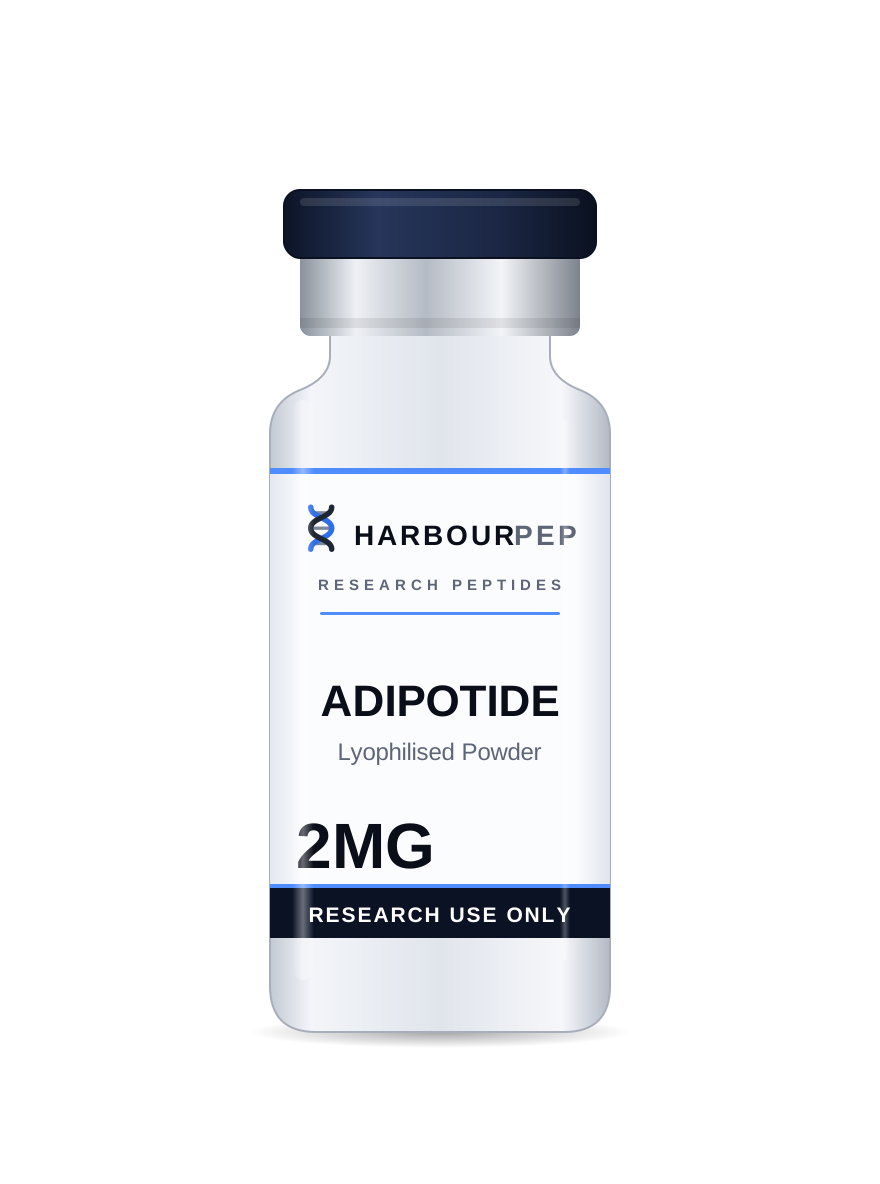
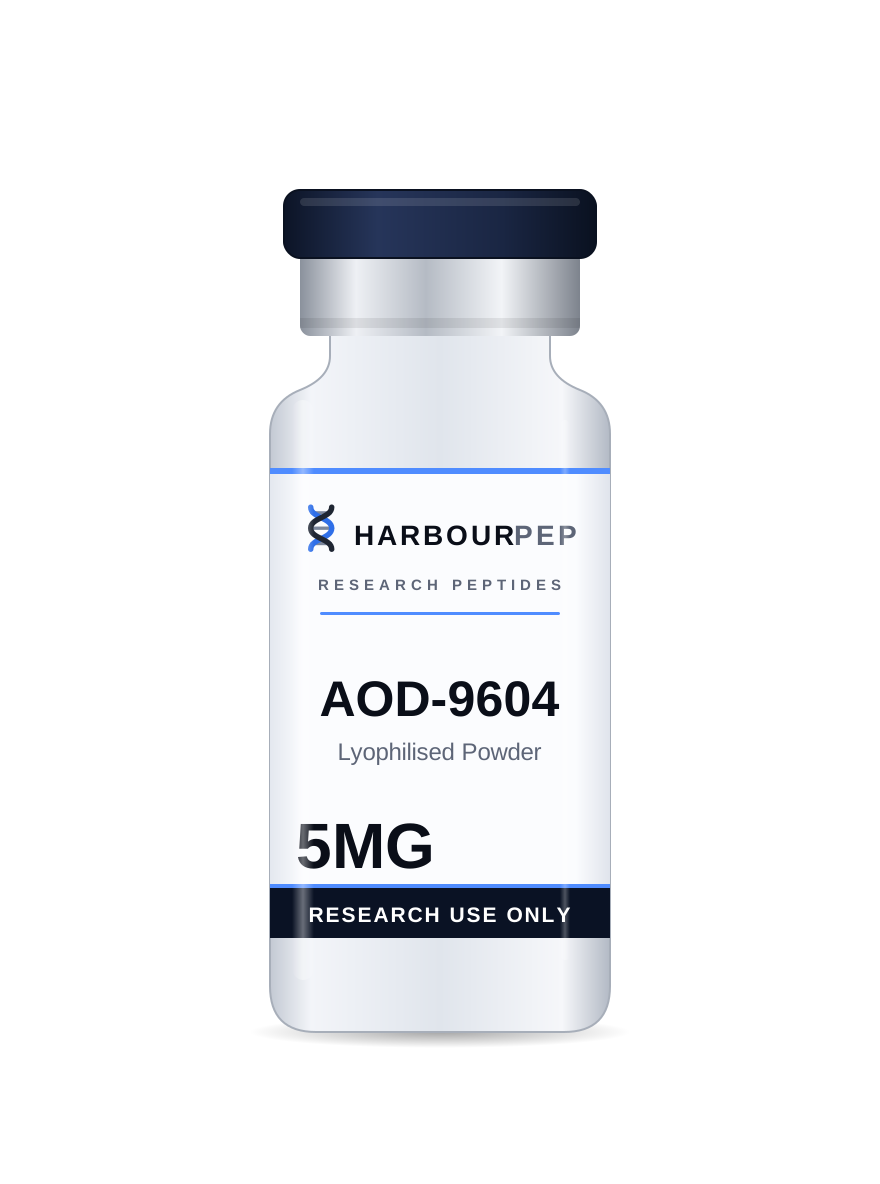
AOD-9604
5MG per vial
AOD-9604 is a synthetic 16-residue peptide corresponding to the C-terminal region of human growth hormone with an N-terminal tyrosine, formally Tyr-hGH(177-191), closed by a disulfide bridge between Cys7 and Cys14 (hGH Cys182 and Cys189). It is universally marketed as "hGH fragment 176-191", but residue 176 of the mature 191-residue hormone is phenylalanine, not tyrosine, so the N-terminal tyrosine stands in place of a native phenylalanine rather than reproducing it. AOD-9604 does not signal through the growth hormone receptor, and no receptor for the fragment has been definitively identified.
In stock
Available to ship today
Pricing on request
Prices are still being set. Add what you need to your cart and request a quote from there — we will come back with current pricing and availability, usually within one business day.
Research use only. Supplied for in vitro laboratory research. Not a drug, supplement, cosmetic or medical device, not approved by the TGA, and not for administration to humans or animals. See our research use conditions.
Compound signature
From confirmed structure
1815g/mol
Molar mass
126atoms
Heavy atoms
Atomic composition
C78H123N23O23S2
- C78
- H123
- N23
- O23
- S2
Sequence
YLRIVQCRSVEGSCGF (Cys7-Cys14 disulfide)
Research applications
Work at Monash University established that the lipolytic activity of human growth hormone mapped to this C-terminal domain separately from the regions governing growth-promoting and insulin-antagonistic signalling, which is the basis for the fragment's use as a tool for dissecting those activities. Heffernan and colleagues (Endocrinology, 2001) used beta-3 adrenergic receptor knockout mice to test whether that receptor is required: the body-weight and lipolysis readouts recorded in wild-type animals under chronic administration were not reproduced in the knockouts, whereas an acute experiment still registered changes in energy expenditure and substrate oxidation in knockout animals. That dissociation is the basis for treating the receptor as necessary for the chronic readouts while an additional beta-3-independent acute component exists. Related work has examined beta-3 adrenergic receptor transcript levels in adipose tissue as a correlated measure. Direct binding of AOD-9604 to that receptor has never been demonstrated.
Formulation and handling
Supplied as a lyophilised powder. The intramolecular Cys7-Cys14 disulfide defines the fragment's conformation, so reconstitution in buffers containing reducing agents such as DTT, TCEP or free cysteine will open the ring, and strongly alkaline conditions favour disulfide scrambling; near-neutral or mildly acidic solvent is preferable for preserving the cyclic form.
Intended use
AOD-9604 is supplied exclusively for in vitro and non-clinical scientific research. It is not approved for human or animal therapeutic, diagnostic or medicinal use. All handling and experimentation must be carried out by trained personnel in an appropriately controlled laboratory.
Specification
- Presentation
- Vial
- Labelled strength
- 5MG
- Molecular formula
- C78H123N23O23S2
- Molar mass
- 1815.1 g/mol
- CAS number
- 221231-10-3
- Appearance
- Lyophilised powder
- Storage
- 2–8 °C sealed, −20 °C long term
Values describe the compound as supplied. Analytical figures for the material in your vial are on that lot’s certificate, not here.
Certificates of analysis
None published yetEvery lot is tested by an independent laboratory and carries its own certificate. Match the lot number printed on your vial to the certificate — a certificate for a different lot tells you nothing about yours.
Slot 1
Awaiting upload
The certificate for the next tested lot will appear here. Until then, ask us for the one matching your vial.
Slot 2
Awaiting upload
The certificate for the next tested lot will appear here. Until then, ask us for the one matching your vial.
Slot 3
Awaiting upload
The certificate for the next tested lot will appear here. Until then, ask us for the one matching your vial.
Also in the range