Move to inspect
Gastric Pentadecapeptide, Body Protection Compound
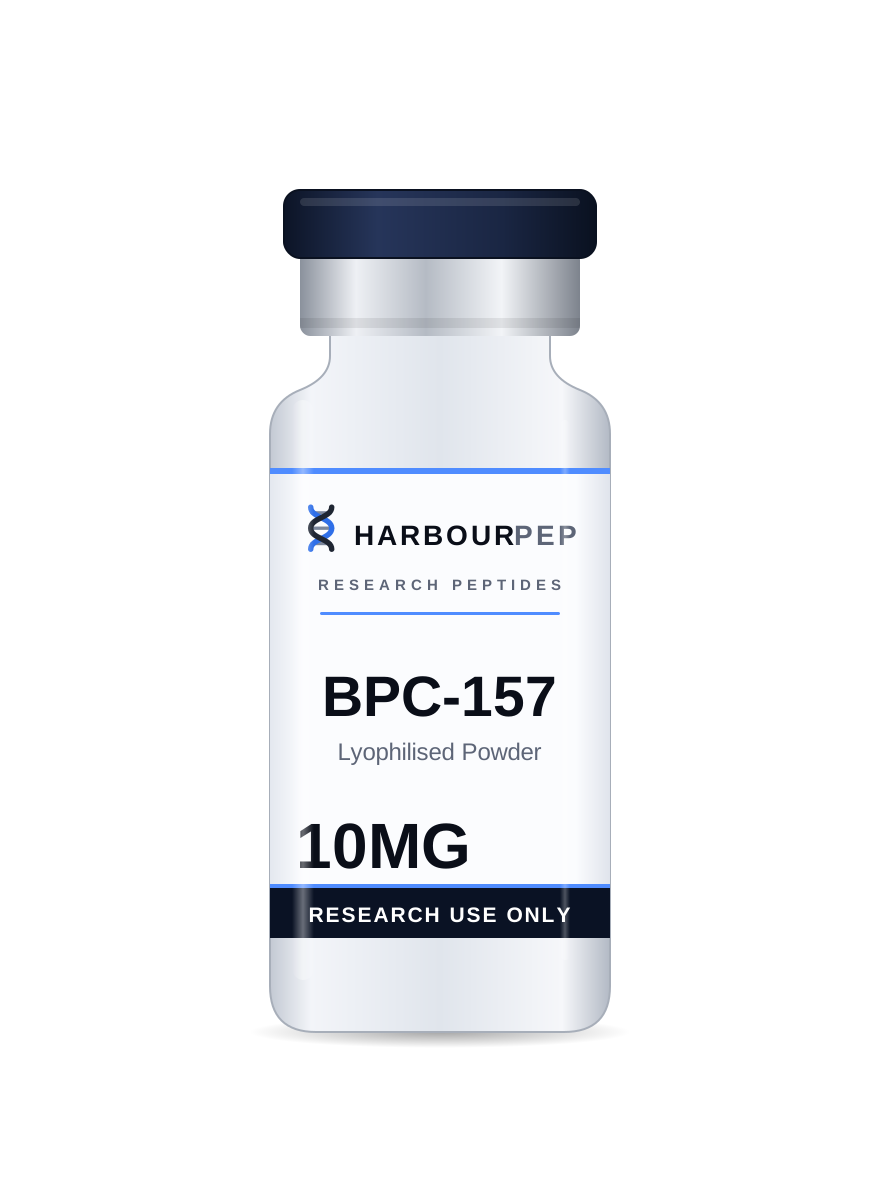
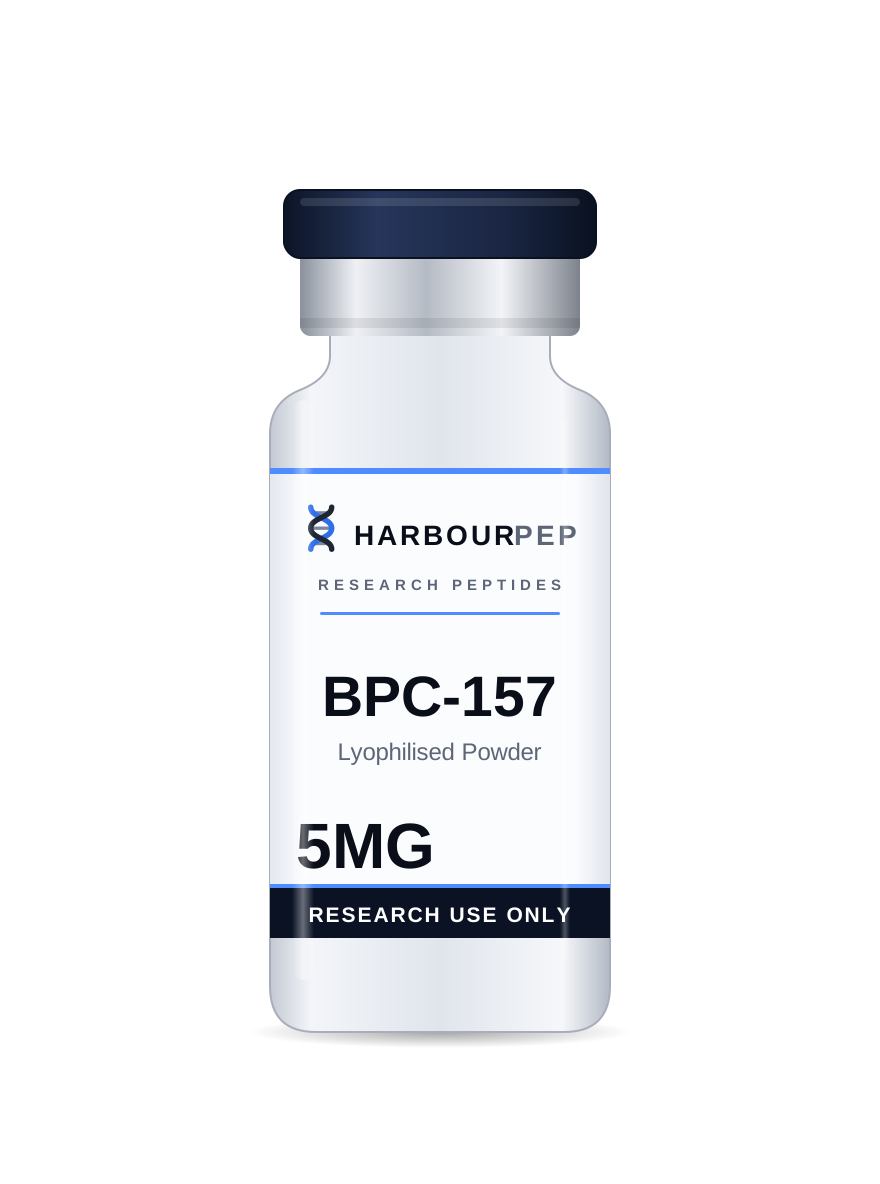
BPC-157
5MG per vial
BPC-157 is a synthetic 15-residue peptide described as a partial sequence of a larger "body protection compound" reported in human gastric juice. That provenance should be treated as a description rather than a characterised fact: the parent protein has never been formally isolated or deposited in sequence databases. The peptide has no identified receptor. Four proline residues, three of them consecutive, restrict backbone rotation, which is the structural rationale usually offered for the resistance to degradation reported in acidic media.
In stock
Available to ship today
Pricing on request
Prices are still being set. Add what you need to your cart and request a quote from there — we will come back with current pricing and availability, usually within one business day.
Research use only. Supplied for in vitro laboratory research. Not a drug, supplement, cosmetic or medical device, not approved by the TGA, and not for administration to humans or animals. See our research use conditions.
Compound signature
From confirmed structure
1420g/mol
Molar mass
100atoms
Heavy atoms
Atomic composition
C62H98N16O22
- C62
- H98
- N16
- O22
Sequence
GEPPPGKPADDAGLV
Research applications
The best-characterised mechanism is downstream rather than at a receptor. In human vascular endothelial cells, in vitro work has reported increased VEGFR2 expression together with VEGFR2 internalisation and activation of the VEGFR2-Akt-eNOS axis, with the endocytosis inhibitor dynasore blocking the internalisation, the downstream signalling and the tube-formation response alike. Related work has characterised Src-caveolin-1-eNOS signalling and effects on vasomotor tone, situating much of the reported activity within the nitric oxide system. Rodent and ex vivo studies have examined angiogenic readouts including chorioallantoic membrane and tube-formation assays alongside blood flow recovery in ischaemic hind limb. A substantial majority of the literature originates from a single research group in Zagreb and independent replication remains limited, which is worth weighting when designing experiments.
Formulation and handling
Supplied as a lyophilised powder, commonly as the acetate salt, and readily soluble in aqueous buffer. The sequence contains no cysteine and therefore no disulfide to preserve, so reducing agents in the buffer are not a concern; the proline-rich backbone also gives an atypical circular dichroism profile with little classical secondary structure, which is expected for this peptide rather than an indication of degradation.
Intended use
BPC-157 is supplied exclusively for in vitro and non-clinical scientific research. It is not approved for human or animal therapeutic, diagnostic or medicinal use. All handling and experimentation must be carried out by trained personnel in an appropriately controlled laboratory.
Specification
- Presentation
- Vial
- Labelled strength
- 5MG
- Molecular formula
- C62H98N16O22
- Molar mass
- 1419.5 g/mol
- CAS number
- 137525-51-0
- Appearance
- Lyophilised powder
- Storage
- 2–8 °C sealed, −20 °C long term
Values describe the compound as supplied. Analytical figures for the material in your vial are on that lot’s certificate, not here.
Certificates of analysis
None published yetEvery lot is tested by an independent laboratory and carries its own certificate. Match the lot number printed on your vial to the certificate — a certificate for a different lot tells you nothing about yours.
Slot 1
Awaiting upload
The certificate for the next tested lot will appear here. Until then, ask us for the one matching your vial.
Slot 2
Awaiting upload
The certificate for the next tested lot will appear here. Until then, ask us for the one matching your vial.
Slot 3
Awaiting upload
The certificate for the next tested lot will appear here. Until then, ask us for the one matching your vial.
Also in the range