Move to inspect
Endogenous Thiol Tripeptide
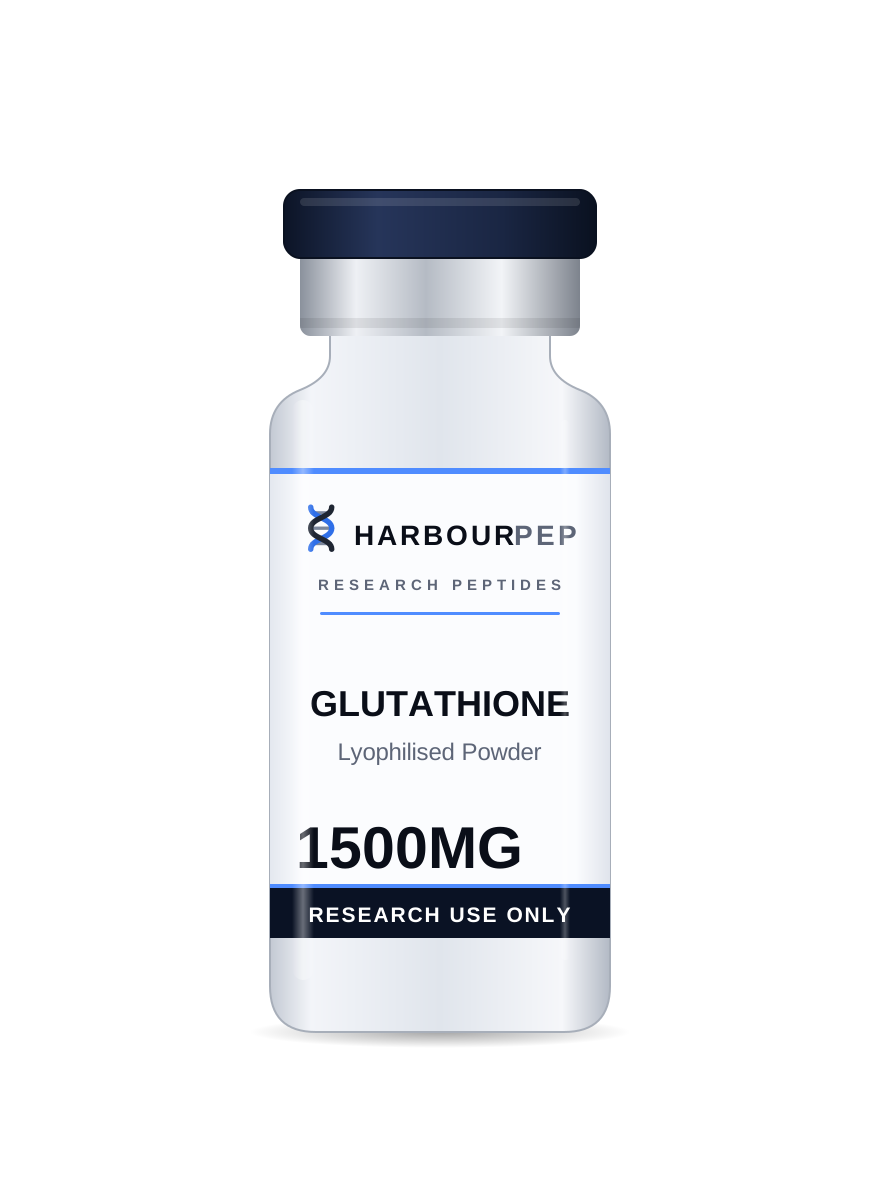
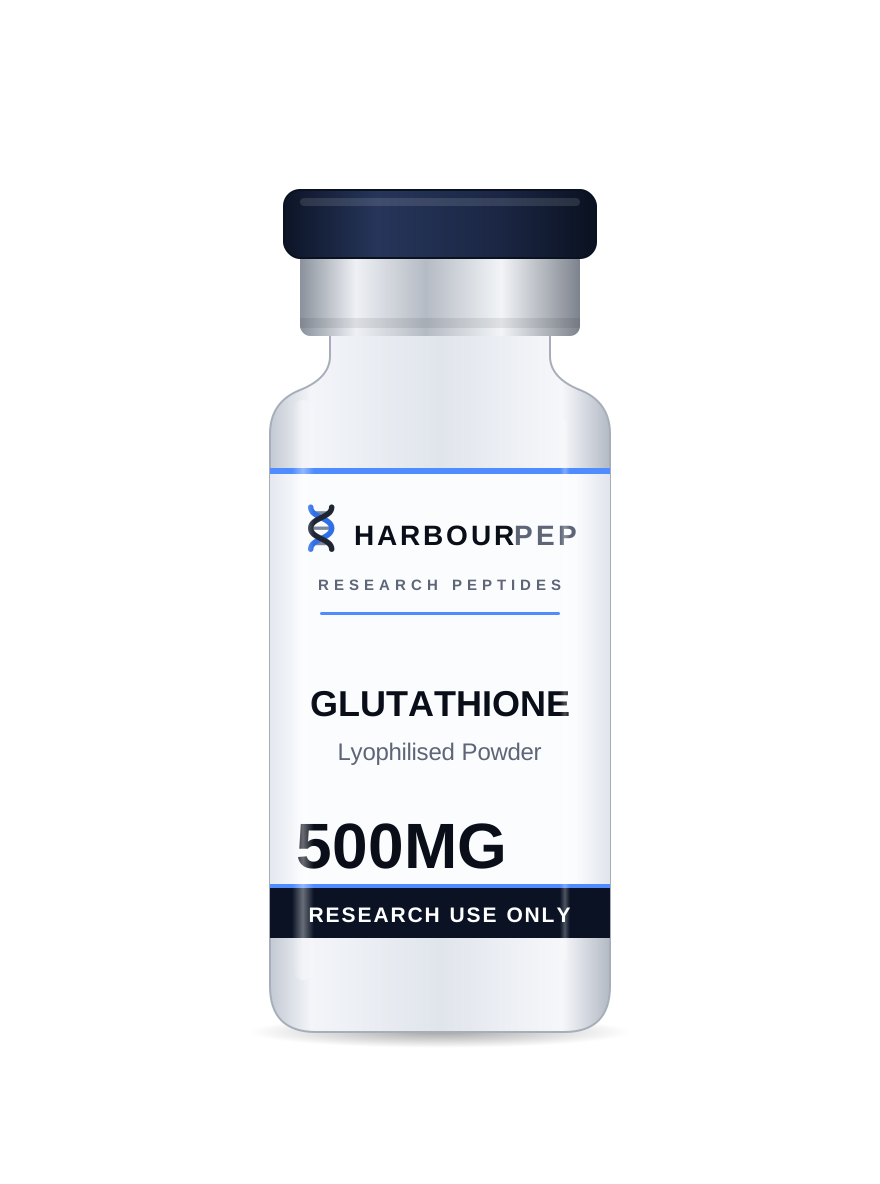
Glutathione
500MG per vial
Glutathione (GSH) is the tripeptide L-γ-glutamyl-L-cysteinylglycine, distinguished from ordinary peptides by an isopeptide bond joining the γ-carboxyl of glutamate to the amino group of cysteine, which renders it resistant to most aminopeptidases and leaves γ-glutamyl transpeptidase as its principal route of turnover. Its chemistry is dominated by the free cysteine thiol, which is oxidised to the disulfide GSSG and recycled by NADPH-dependent glutathione reductase. Present at millimolar concentrations in most mammalian cells, it functions as the principal intracellular redox buffer, as the obligate reducing cofactor of the glutathione peroxidases, and as the conjugating substrate of the glutathione S-transferases.
Coming soon
Ask us when it returns
Pricing on request
Prices are still being set. Add what you need to your cart and request a quote from there — we will come back with current pricing and availability, usually within one business day.
Research use only. Supplied for in vitro laboratory research. Not a drug, supplement, cosmetic or medical device, not approved by the TGA, and not for administration to humans or animals. See our research use conditions.
Compound signature
From confirmed structure
307.3g/mol
Molar mass
20atoms
Heavy atoms
Atomic composition
C10H17N3O6S
- C10
- H17
- N3
- O6
- S1
Characterised targets
- Glutathione peroxidases (GPX)
- Glutathione S-transferases (GST)
- Glutathione reductase (GSR)
- Glutaredoxins
Sequence
γ-Glu-Cys-Gly (L-γ-glutamyl-L-cysteinylglycine)
Research applications
The GSH:GSSG ratio is one of the most widely utilised readouts of cellular redox state, and reported values differ sharply by compartment — commonly quoted in the range of 30:1 to 100:1 in cytosol against roughly 1:1 to 3:1 in the endoplasmic reticulum, where the more oxidising couple is characterised as permissive for disulfide bond formation in secretory protein maturation. In vitro work has characterised GSH as the nucleophile in phase II conjugation, where glutathione S-transferases couple it to electrophilic xenobiotics, and as the donor in S-glutathionylation, a reversible cysteine modification studied as a regulatory post-translational mark. Defined GSH/GSSG couples are also used as buffer systems in oxidative protein-refolding experiments, where the ratio sets the thiol–disulfide exchange equilibrium.
Formulation and handling
Supplied as a lyophilised powder; the reduced thiol is the species of interest and it autoxidises to GSSG in aqueous solution, increasingly so above neutral pH and in the presence of trace transition metals, so working solutions are conventionally prepared immediately before use rather than stored reconstituted. Reconstituted glutathione is markedly acidic and will shift the pH of weakly buffered systems, which is worth accounting for when it is added to culture medium.
Intended use
Glutathione is supplied exclusively for in vitro and non-clinical scientific research. It is not approved for human or animal therapeutic, diagnostic or medicinal use. All handling and experimentation must be carried out by trained personnel in an appropriately controlled laboratory.
Specification
- Presentation
- Vial
- Labelled strength
- 500MG
- Molecular formula
- C10H17N3O6S
- Molar mass
- 307.32 g/mol
- CAS number
- 70-18-8
- Molecular targets
- Glutathione peroxidases (GPX), Glutathione S-transferases (GST), Glutathione reductase (GSR), Glutaredoxins
- Appearance
- Lyophilised powder
- Storage
- 2–8 °C sealed, −20 °C long term
Values describe the compound as supplied. Analytical figures for the material in your vial are on that lot’s certificate, not here.
Certificates of analysis
None published yetEvery lot is tested by an independent laboratory and carries its own certificate. Match the lot number printed on your vial to the certificate — a certificate for a different lot tells you nothing about yours.
Slot 1
Awaiting upload
The certificate for the next tested lot will appear here. Until then, ask us for the one matching your vial.
Slot 2
Awaiting upload
The certificate for the next tested lot will appear here. Until then, ask us for the one matching your vial.
Slot 3
Awaiting upload
The certificate for the next tested lot will appear here. Until then, ask us for the one matching your vial.
Also in the range